Vacuum Sealer vs Ziploc Bags: Is Sealing Worth It? (November 2026)
A vacuum sealer wins for long freezer storage and bulk meat; Ziploc bags win for speed and everyday fridge leftovers. In the vacuum sealer vs Ziploc bags choice, the FoodSaver V4400 is the better pick overall if you freeze food for months.
On this page (8 sections)
- Vacuum sealer vs Ziploc bags: which should you buy?
- Why air removal decides freshness
- How much time and effort does each take?
- Which keeps food fresh in the fridge and pantry?
- What does each cost to keep using?
- Do you have the counter space and power?
- Which one suits your kitchen?
- Is a vacuum sealer worth it compared with Ziploc bags?
A vacuum sealer wins for long freezer storage and bulk meat; Ziploc bags win for speed and everyday fridge leftovers. For the vacuum sealer vs Ziploc bags decision, the FoodSaver V4400 is the better pick overall if you freeze food for months, while the Chef Preserve compact sealer suits small kitchens and travel.
Ziploc bags cost little and take seconds to close. A vacuum sealer pulls air out of the bag before it seals, which is what slows freezer burn and drying.
That extra step is the whole point. The question is whether your freezer habits earn back the machine's counter space and the cost of bags.
 Best for small kitchens and travel
Chef Preserve Compact Vacuum Sealer
Vacuum sealer vs Ziploc bags: which should you buy?
Buy a vacuum sealer if you freeze meat or batch meals for months, and keep Ziploc bags for quick fridge storage. Most busy households end up using both.
A vacuum sealer removes most of the air from the bag before sealing. Less air means less frost, less drying and less freezer burn over time.
FoodSaver says meat preserved in its system can last up to 3 years in the freezer and still taste fresh. Refrigerated leftovers and produce sealed in its bags stay good for weeks instead of days, according to FoodSaver.
Ziploc bags can't promise that. They're built for a quick press-and-close seal, not for pulling a vacuum.
Air stays inside, so food dries and picks up frost faster.
That's why the honest answer is a split. The vacuum sealer is the better tool for long storage and bulk buying.
Ziploc bags are the better tool for speed, snacks and food you'll eat within a few days.
The two side by side
| Feature | FoodSaver V4400 | Chef Preserve Compact | Ziploc bags |
|---|---|---|---|
| How it seals | Heat seal after vacuum | Suction with zipper bags | Press-and-close zip |
| Power | 800 watts, outlet | Rechargeable battery | None |
| Bag type | Vacuum seal rolls and bags | Its own reusable bags | Standard zip bags |
| Best storage window | Up to 3 years in freezer | Short to medium term | Days in fridge, weeks in freezer |
| Space needed | 20 in wide countertop | Pepper-grinder size | A drawer |
Why air removal decides freshness
Air is the enemy of frozen food, and that's the core of the vacuum sealer vs Ziploc comparison. Remove it and food keeps its flavor and texture longer.
Freezer burn is drying. Moisture leaves the food surface and turns to ice crystals inside the bag when air is present.
More air means faster damage.
A vacuum sealer pulls the air out before sealing the bag shut. A zipper bag only closes in whatever air was already there.
You can press some air out of a Ziploc bag by hand. That helps for a few days or weeks, but it leaves far more air than a vacuum seal.
What FoodSaver promises for freezer life
FoodSaver says its system keeps meat fresh and freezer burn free for up to 3 years in the freezer. That's the brand's claim for food sealed with its bags and rolls.
The same company says fridge leftovers and produce last weeks rather than days in its sealed bags. Those are maker figures, so treat them as the best case for careful sealing and good food handling.
What a Ziploc bag can realistically do
A Ziploc bag is a short-term container. For fridge leftovers, a few days is normal.
In the freezer, expect a few weeks to a couple of months before quality drops, depending on the food.
That's fine for meal prep you'll eat soon. It's a poor fit for a chest freezer full of bulk meat bought on sale.
How much time and effort does each take?
Ziploc bags are faster to close, while a vacuum sealer adds a minute or two per bag but saves cleanup later. The gap narrows once you seal in batches.
A zipper bag takes seconds. You load food, press the seal closed and put it away.
There's nothing to plug in and nothing to clean.
A vacuum sealer takes longer per bag. You cut or pick a bag, load the food, place the open end in the machine and start the cycle.
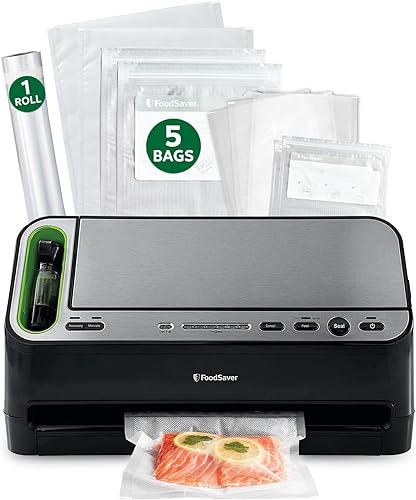
The FoodSaver V4400 makes this easier with automatic bag detection. FoodSaver says you put the bag in the vacuum chamber and the machine does the rest.
That's two quick steps per bag.
The Chef Preserve takes a different route. You press one button, it seals in about 5 seconds and shuts off by itself.
That's about as fast as a vacuum seal gets.
Batch sealing changes the math
Sealing one bag on its own feels like extra work. Sealing a week of meal portions in one sitting takes the same setup and pays off in freezer space and less spoilage.
Portion first, then seal. Flat, even portions freeze faster and stack better than lumpy bags.
Which keeps food fresh in the fridge and pantry?
Both work in the fridge, but the vacuum sealer earns its keep on food you keep longer than a few days. Ziploc bags stay the simpler choice for snacks and lunches.
A Ziploc bag is easy to grab, reopen and reseal. That suits sandwiches, cut vegetables and cereal you'll finish quickly.
A vacuum sealer shines when food sits for a week or more. Cheese, cooked meat, sauces and produce sealed under vacuum keep their texture better than food sitting in a partly open bag.
The FoodSaver V4400 also has automatic moisture detection. FoodSaver says the machine senses moisture and switches to the right mode for a tight seal.
Its drip tray catches overflow and is dishwasher safe.
That matters for wet foods like marinades and cooked stews. A Ziploc bag leaks more easily in a packed fridge, and its seal weakens with repeated opening.
Dry goods and pantry storage
Vacuum sealing dry goods like coffee, nuts and grains slows staleness. A Ziploc bag helps for a few weeks, but air and humidity get in faster.
For pantry staples you open daily, a Ziploc bag is still more practical. Vacuum bags are best for the backup supply you'll open later.
What does each cost to keep using?
A vacuum sealer costs more up front and needs a supply of bags, while Ziploc bags are cheap and sold everywhere. The break-even depends on how much food you'd otherwise throw away.
A heat-seal machine like the FoodSaver V4400 runs on vacuum seal rolls and bags. FoodSaver's starter kit includes an 11 inch by 10 foot roll, three quart bags and two gallon bags.
It also includes quart and gallon zipper bags for the handheld mode.
You buy replacements as you use them. The machine works with FoodSaver's 8 inch and 11 inch rolls and its pre-made bag sizes.
The Chef Preserve takes a different supply model. It comes with 30 reusable bags, split into 15 small and 15 medium.
The bags are dishwasher, freezer and microwave safe, so you wash and reuse them instead of buying new ones each time.
When the sealer pays for itself
The math favors a vacuum sealer when you regularly buy meat in bulk or cook large batches. A freezer full of well-sealed portions means fewer repurchases and less waste.
The Chef Preserve is the cheaper way in. Its reusable bags cut the ongoing supply cost and its battery power means no cord.
Skip both if you rarely freeze food. Ziploc bags are the lower-cost tool for light use.
Do you have the counter space and power?
A countertop sealer needs room and an outlet, while a compact or handheld model fits almost anywhere. Ziploc bags need only a drawer.
The FoodSaver V4400 measures 11 inches long, 20 inches wide and 12 inches high. At 20 inches wide, it takes a real stretch of counter.
Plan a spot where it can stay out, because a machine you have to unpack each time gets used less.
It also needs a power outlet. It runs at 800 watts and its operation mode is automatic.
That's a standard kitchen outlet job.
The Chef Preserve is the space-friendly option. It's the size of a pepper grinder and runs on a rechargeable battery.
One charge is enough to seal 1000 bags, according to Chef Preserve. It's built for trips, RVs and camping as well as small kitchens.
Setup tips for either machine
Keep the sealing area dry and flat. Wipe the bag's open end so food and moisture don't sit in the seal zone.
Leave room in the bag for the vacuum and seal. Overfilled bags seal poorly on any machine.
If you're weighing a countertop sealer against a compact one, our Bonsenkitchen vacuum sealer review covers another full-size option to compare.
Which one suits your kitchen?
Pick the FoodSaver V4400 for a family freezer, the Chef Preserve for small spaces and travel, and Ziploc bags for light everyday use. Match the tool to how long your food sits.
Who should buy the FoodSaver V4400?
Buy it if you freeze bulk meat, batch meals or garden produce and want it to keep for months. It's the better fit for a household that fills a freezer and hates throwing food away.
The automatic bag detection and moisture detection cut the fiddly parts. Built-in roll storage and a cutter let you make custom bags for whatever you seal.
FoodSaver backs it with a 5 year limited warranty.
Skip it if counter space is tight or you rarely freeze food. Our full FoodSaver V4400 vacuum sealer review digs into its modes and bags.
Who should buy the Chef Preserve Compact?
Buy it if you have a small kitchen, live in an RV or want a sealer for camping trips. It's battery powered, small and comes with 30 reusable bags.
It's also the better pick for someone who wants to try vacuum sealing without committing much space. Chef Preserve offers a 60-day money-back guarantee and a 2 year warranty.
Skip it if you mostly seal large cuts of meat or big batches. Its zipper bags suit portions and everyday food better than large freezer packs.
Who should just buy Ziploc bags?
Buy Ziploc bags if you store sandwiches, snacks and leftovers you'll eat within a few days. They're fast, cheap and need no cleaning.
They're also the right call for anyone who won't maintain a sealer. A machine that sits unused is wasted money.
Our guide to what vacuum sealer should I buy helps if you're still deciding between types.
Is a vacuum sealer worth it compared with Ziploc bags?
Yes, a vacuum sealer is worth it if freezer burn and food waste are real costs in your kitchen. Otherwise Ziploc bags remain the cheaper, faster tool for everyday storage.
The FoodSaver V4400 is the better pick overall for most readers. It handles long freezer storage, bulk meat and wet foods, and FoodSaver's 3 year freezer claim shows what the system is built for.
The 9.1 score reflects its automatic features and broad bag compatibility.
The Chef Preserve Compact is the smarter buy for small kitchens, travel and light use. Its reusable bags and battery power keep the footprint and ongoing cost low.
That's why it scores 8.5.
Use Ziploc bags where speed matters more than shelf life. If you keep food for months, the sealer earns its place.
If you're unsure whether FoodSaver is the right brand at all, our take on whether FoodSaver is a good vacuum sealer answers that directly.
Pick the FoodSaver V4400 for a freezer you fill with bulk food. Pick the Chef Preserve for tight space or travel.
Keep Ziploc bags for the lunches and snacks that never last long anyway.
Frequently asked questions
Is a vacuum sealer better than Ziploc bags for the freezer?
A vacuum sealer is better for freezer storage you keep for months. FoodSaver says meat sealed in its system can last up to 3 years in the freezer without freezer burn.
Ziploc bags are fine for a few weeks, but trapped air speeds up drying and frost.
How much longer does vacuum-sealed food last?
FoodSaver puts freezer life at up to 3 years for meat sealed in its system. That's a maker figure, not a guarantee for every food.
Refrigerated leftovers sealed in a vacuum bag are good for weeks instead of days, according to FoodSaver.
Do you need special bags for a vacuum sealer?
Yes. A heat-seal machine like the FoodSaver V4400 needs vacuum seal bags or rolls.
A handheld model like the Chef Preserve works with its own reusable zipper bags.
Regular Ziploc bags aren't built for vacuum suction and can collapse.
Can I use Ziploc bags with a vacuum sealer?
No, not for a full vacuum seal. Standard Ziploc bags don't have the channeled texture that lets air escape, so a suction sealer can't pull them tight.
FoodSaver sells FreshSaver zipper bags for its handheld mode instead.
Is a vacuum sealer worth it for small households?
It's worth it if you cook batches, buy meat in bulk or throw away freezer food often. If you mostly store a sandwich and a few fridge leftovers, Ziploc bags are faster and cheaper.
A compact model like the Chef Preserve keeps the cost and space low.
How long do Ziploc bags keep food fresh?
Ziploc bags keep fridge food fresh for a few days and freezer food for a few weeks to a couple of months, depending on the food and how much air you press out. Vacuum sealing removes more air, so it slows freezer burn for much longer.