What Vacuum Sealer Should I Buy?
Buy a countertop vacuum sealer for most home food storage. Choose a handheld model for small portions and reusable zipper bags, or a chamber machine for frequent liquids and smooth pouches.
On this page (10 sections)
- What vacuum sealer should I buy for my kitchen?
- How do the main vacuum sealer types differ?
- Which vacuum sealer should I buy for the foods I seal?
- Should I get a vacuum sealer with a bag roll or reusable bags?
- How much vacuum sealer power do I need?
- What vacuum sealer features are useful?
- How should I choose a vacuum sealer for a small kitchen?
- When is a chamber vacuum sealer worth buying?
- How can I avoid common vacuum sealer problems?
- How to choose the right vacuum sealer for your routine
Buy a countertop vacuum sealer if you want one machine for routine freezer prep, leftovers and custom-size bags. A handheld sealer suits smaller jobs and zipper bags, while a chamber vacuum sealer is better suited to frequent liquids and smooth pouches.
The right vacuum sealer depends on what you seal most often, how much storage room you have and which bags you want to keep on hand. Think about those three things before comparing controls or extra features.
For most kitchens, an external countertop machine offers a useful balance of flexibility and size. If you seal soup, sauces or marinades often, a chamber machine may better match your routine.
What vacuum sealer should I buy for my kitchen?
Choose a countertop vacuum sealer for everyday food storage, a handheld sealer for small, quick jobs, or a chamber machine for wet foods and smooth pouches. Your usual food and bag type are the best first filters.
| Type | Suits | Keep in mind |
|---|---|---|
| Countertop external | Meat portions, dry goods, vegetables and regular meal prep | Most bags need textured channels for air to escape |
| Handheld | Small portions, travel and reusable zipper bags | Compatible bags or containers may be required |
| Chamber | Soups, sauces, marinades and smooth pouches | The machine takes more space than a handheld sealer |
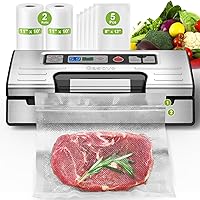
A standard countertop model works by pulling air out through a bag opening, then sealing the open edge. It can be a good fit when you want to portion food into bags, make bags from rolls or store a mix of dry and moist foods.
A handheld model is a compact option for smaller portions. Check its compatible bags before buying, since the system may use reusable zipper bags instead of bags cut from rolls.
A chamber machine pulls air from the space around the food pouch. This can help with liquids because the machine does not need to draw liquid through an external suction channel.
How do the main vacuum sealer types differ?
The main difference is where the vacuum is created and what bag styles the machine uses. That difference affects which foods are easy to seal and how much space the equipment needs.
Countertop vacuum sealer machines
Countertop machines seal bags from the open edge. Many can work with rolls, which lets you cut a bag to fit a portion or package.
The external design suits routine freezer prep and general food storage. For a closer look at this category, read our countertop vacuum sealer guide.
Handheld vacuum sealers
Handheld sealers remove air from compatible zipper bags or containers. Their smaller size can suit a drawer or a kitchen with limited counter space.
This style can work well for small portions you open and reseal. Check whether the bags are reusable and what types of containers the sealer supports.
Chamber vacuum sealer machines
A chamber machine seals a pouch inside an enclosed space. The air pressure changes around the pouch, so liquid-rich foods can be sealed without the machine drawing liquid through an external channel.
Chamber machines can use smooth pouches, which may be useful for frequent sealing.
They need a dedicated countertop or storage spot, so measure where the unit will live before choosing one. Our chamber vacuum sealer guide explains the trade-offs.
Which vacuum sealer should I buy for the foods I seal?
Choose based on the food you seal most often, then check the machine’s controls and bag compatibility. A single machine may not be ideal for every food or storage routine.
For meat portions and vegetables, a countertop external sealer is a straightforward choice. Look for separate dry and moist settings if your routine includes both, and use the right bag style for the machine.
For bread or other soft foods, adjustable vacuum pressure can help reduce crushing. The NESCO VS-12 offers a gentle vacuum option, along with dry, moist and double seal settings.
For soup, sauces or marinades, a chamber design can keep liquid from being pulled through an external suction channel. The Avid Armor USV20 has a 4 L chamber and adjustable vacuum time.
For small portions and zipper bags, a handheld sealer may be enough. The Chef Preserve Compact includes reusable vacuum bags and is battery powered.
For larger batches or regular roll use, consider a countertop machine with built-in roll storage and a cutter. The FoodSaver V4400 includes both, plus a retractable handheld sealer for compatible zipper bags and containers.
Use a chamber machine if wet foods are a regular job, but freeze liquid foods until solid before sealing them in standard external sealer bags. For more detail, see how to vacuum seal soup without a mess.
Should I get a vacuum sealer with a bag roll or reusable bags?
Choose a roll-compatible countertop model if you want to cut bags to the size of each portion. Choose a handheld system if compatible zipper bags suit the way you store and reopen food.
Rolls can reduce the need to keep several pre-cut bag sizes. You cut the length you need and seal one end to create a bag, then seal the open end after filling it.
Reusable zipper bags can suit foods you open and reseal. Confirm that the bags work with the machine you choose; an external countertop sealer and a handheld attachment may use different bag styles.
Chamber machines generally work with smooth pouches, which do not need textured channels. This can be useful if you seal often and want to compare pouch options.
Read how vacuum sealer rolls work before choosing a roll system. It explains how rolls become custom-size bags and what the sealing steps involve.
How much vacuum sealer power do I need?
Choose settings that match the food you seal rather than relying on a single power number. Gentle pressure control helps with soft foods, while adjustable vacuum and seal time can give you more control over different jobs.
A powerful pump may help remove air, but the result also depends on bag placement, the seal and the food. Soft foods need care: too much vacuum can flatten bread or crush delicate produce.
Check for a pulse or gentle setting if you plan to seal soft items. For a plain-language look at pump strength and measurements, see how powerful a vacuum sealer should be.
What vacuum sealer features are useful?
The useful features are the ones that save steps in your routine or give you better control. Bag compatibility, moisture handling and vacuum settings matter more than a long feature list.
- Built-in roll storage and cutter: useful if you make custom-size bags often.
- Dry and moist settings: helpful when you seal both pantry foods and damp ingredients.
- Gentle or pulse control: useful for soft foods that can be crushed.
- Removable drip tray: can make cleanup easier after sealing moist foods.
- Compatible zipper bag or container attachment: helpful if you regularly seal items outside standard bags.
- Adjustable vacuum and seal time: useful when you want more control over chamber sealing.
An automatic cycle can simplify bag sealing, but it does not remove the need to position the bag correctly. Follow the machine’s instructions and leave enough clear space at the opening for a good seal.
How should I choose a vacuum sealer for a small kitchen?
Choose a compact machine that fits both your counter and your storage spot. A handheld sealer takes less room, while a countertop machine may be more practical if you seal food regularly.
Measure the space where you plan to use the machine, including room to open it and place a bag. Also measure the cabinet or drawer where it will go between uses.
A compact countertop model can be a middle ground when you need roll bags but cannot leave a large appliance out. For more options, see our best compact vacuum sealers for small kitchens.
If you batch-seal large quantities, a larger countertop machine or chamber model may save repeated setup. Consider how often you will use it before giving up valuable counter space.
When is a chamber vacuum sealer worth buying?
A chamber machine can be worth buying if you seal liquids or use smooth pouches often. If most of your jobs are dry foods and occasional meat portions, a countertop external model may be enough.
The chamber design helps keep liquids from being pulled into an external suction channel. It can also make smooth pouches an option, but the machine needs space for its chamber and lid.
The Avid Armor USV20 has a 4 L stainless steel chamber and an 11.5 in heating bar. Its adjustable vacuum time ranges from 15 to 60 seconds, and it works with smooth pouches up to 11 x 10 in.
Consider the size of the foods you plan to seal, not just the chamber volume. A pouch must fit inside the chamber with enough room for the seal area.
How can I avoid common vacuum sealer problems?
Start with correct bag placement and a clean sealing area. If the machine stops vacuuming or the seal fails, check the bag, lid and seal area before assuming the unit is broken.
Make sure the open end of the bag sits flat in the sealing channel, without folds or food crumbs near the edge. Leave enough empty bag above the food for the machine to draw air out and create a seal.
For a countertop external sealer, excess liquid at the bag opening can interfere with sealing. Chill or freeze liquid foods until firm before sealing them in standard bags, or use a chamber machine for frequent liquid jobs.
If your machine is not drawing air, use our troubleshooting guide for why a vacuum sealer may not vacuum. It covers checks you can make before replacing bags or equipment.
How to choose the right vacuum sealer for your routine
Buy a countertop vacuum sealer if you want roll bags and regular food prep, a handheld model if you seal small portions in compatible zipper bags, or a chamber machine if liquids and smooth pouches are frequent jobs. Start with your food and bag type, then confirm the machine fits your kitchen.
For most households, a countertop model is the most flexible starting point.
If liquids are your main challenge, compare chamber machines before deciding. For general machine options, browse our countertop vacuum sealers.
Frequently asked questions
What vacuum sealer should I buy for home use?
A countertop vacuum sealer is a practical starting point for regular home food storage because it works with bags made from rolls and can handle many dry and moist foods. Choose a handheld model for smaller portions and zipper bags, or a chamber machine if you often seal liquids.
Are handheld vacuum sealers worth buying?
A handheld vacuum sealer can suit small kitchens, travel and modest portions because it takes less room than a countertop unit. Check which bags it needs and whether they can be reused; many handheld systems use special zipper bags rather than standard rolls.
Should I buy a chamber vacuum sealer?
A chamber vacuum sealer is worth considering if you often seal soups, sauces, marinades or other wet foods. The food and pouch sit inside a chamber, so the machine can remove air without drawing liquid through an external suction channel.
Can one vacuum sealer work with every bag?
No. Countertop external sealers generally need textured channels in the bag to let air escape, while chamber machines can use smooth pouches.
Handheld systems may need compatible zipper bags or containers, so check the bag style before choosing.
What should I check before buying a vacuum sealer?
Match the machine to your food, bag type and available counter or storage space. Check how it handles moist foods, whether it accepts rolls or only compatible bags, and whether the controls let you adjust vacuum strength for soft foods.