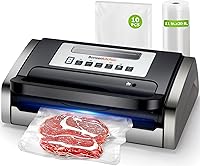
How to Use a Nesco Vacuum Sealer
To use a Nesco vacuum sealer, load a bag into the chamber, close and lock the lid, choose your seal mode and vacuum pressure, then press start. The machine pulls air out and seals the bag, and the handle opens when it finishes.
On this page (12 sections)
- What do you need before you start vacuum sealing?
- How do you load a bag into the Nesco VS-12?
- Which seal mode should you choose for your food?
- What is the gentle vacuum option for?
- How do you run the vacuum and seal cycle?
- How do you vacuum seal liquids and moist foods?
- How do you keep the sealer working well?
- How do you choose bags for a Nesco sealer?
- How do you store sealed food and handle the bag afterward?
- What should you do when a seal fails?
- How do you use a Nesco vacuum sealer without one?
- Which Nesco sealer settings fit your routine?
Here's how to use a Nesco vacuum sealer: load a bag into the chamber, close and lock the lid, choose a seal mode and vacuum pressure, then press start. The machine pulls the air out and heat-seals the bag, and the handle opens when the cycle finishes.
The process stays the same across Nesco models, but the VS-12 gives you more choices at the control panel. This walkthrough covers bag loading, the three seal modes, the two vacuum settings, and the checks that keep food fresh.
What do you need before you start vacuum sealing?
You need the sealer, the right bags, and clean, dry hands before your first cycle. Nesco ships the VS-12 with two bag rolls, so you can cut your first bags without buying anything extra.
The included rolls measure 8.6 inches by 9.85 feet and 11.8 inches by 9.85 feet. The wider roll suits larger portions and bulk freezer items, while the narrower roll handles single servings and smaller cuts.
Keep the sealing area clear. A flat counter with room to lay a filled bag helps you position it straight, and the viewing window on the lid lets you confirm placement before you lock the handle.
Food should be cool when it goes in. Hot food releases steam that weakens the seal, so let leftovers cool first.
How do you load a bag into the Nesco VS-12?
Cut the bag to length with the built-in cutter, seal one end, then fill it. The cutter and roll storage sit inside the machine, so you can make a custom-size bag without reaching for scissors.
Cutting and sealing the first end
Pull the roll to the length you need, run the sliding cutter across it, and lay the bag flat. Insert the open end into the seal area and close the handle.
The VS-12's double heat seal creates a stronger closure than a single-seal machine, so the bottom of the bag holds up to liquid and moist foods.
Filling and placing the bag
Fill the bag to about two-thirds of its length. That leaves room for the vacuum to pull the bag tight without liquid or crumbs reaching the seal strip.
Wipe the inside of the bag near the opening if food touches it.
Lay the open end across the seal bar and check it sits straight through the viewing window. A crooked bag can seal with a wrinkle or a gap.
Close the lid and press the easy-lock handle until it clicks.
Which seal mode should you choose for your food?
Use Dry for flour, crackers, and other dry goods, Moist for foods with juices, and Double for long freezer storage. The seal mode controls how much heat the machine applies to close the bag.
Dry mode suits pantry staples and firm, low-moisture foods. Moist mode adds sealing time so liquids and marinades get a clean closure.
Double mode runs two seals in a row for a stronger bond on soups, sauces, and moist proteins.
Double sealing is worth the extra seconds for freezer portions. A weak seal is the main way freezer burn gets in, and a second pass reduces that risk.
What is the gentle vacuum option for?
Gentle vacuum lowers the suction so soft foods keep their shape. Normal vacuum is the default for firm foods, meat, and freezer portions.
Switch to Gentle for bread, berries, pastries, and marinated meats. These foods collapse or crush under full suction.
A softer pull flattens the bag without deforming the food inside.
The VS-12's 130-watt double vacuum pump removes air more effectively than single-pump machines. Nesco says that helps keep meats, produce, and leftovers fresh up to five times longer than traditional storage.
Match the pump's full pull to sturdy foods and save the gentle setting for the delicate items.
How do you run the vacuum and seal cycle?
Press the start control after the lid locks, and wait for the cycle to finish. The machine runs the pump, then applies the heat seal on its own.
The easy-lock handle and viewing window matter most for new users. One-handed operation leaves your other hand free to steady the bag, and the window confirms the bag sits over the seal bar before the pump starts.
Don't open the lid mid-cycle. Wait for the handle to release, which signals the seal has cooled.
Opening early can pull the bag away from the seal bar while it's still soft.
Check the finished bag before storage. Run a thumb along the seal to feel for wrinkles or open spots.
A flat, even strip means the seal closed properly. If the bag has an obvious gap, cut below it and run the cycle again.
How do you vacuum seal liquids and moist foods?
Use Moist or Double mode, leave headspace, and keep the bag upright. Liquids are the main cause of failed seals on any vacuum sealer, and the VS-12's settings help manage them.
Fill liquid foods to about two-thirds of the bag's length. Freeze soups and sauces first in a container, then seal the frozen block; this stops liquid from getting pulled toward the seal strip.
Hold the bag upright as the pump runs. Any liquid that reaches the seal area weakens the closure, so wipe and restart if it happens.
For portions you plan to keep for months, run the double seal and check the strip before the bag goes into the freezer.
How do you keep the sealer working well?
Wipe the sealing bar after each session and keep the gasket clean. Food residue on the seal bar is the most common cause of weak seals.
Check the foam gasket around the lid when suction drops. The ziHenryDa set includes four foam gaskets made for the Deluxe Food VS-12 plus a roll of PTFE tape for the seal bar.
Each gasket measures about 13.5 inches long, 1.76 inches wide, and 0.3 inches thick.
The maker recommends replacing the gasket about once a year. Replacing it restores full suction, which matters on a dual-gasket machine.
Tear off the tape, clean the spot, and press the new strip into place.
Store the sealer with the lid open so the gasket doesn't compress. Unplug it after use.
How do you choose bags for a Nesco sealer?
Match bag width to the sealer's 11.8-inch limit and pick the roll length that fits your portions. Nesco says the VS-12 works with any brand of vacuum sealer bags.
Rolls let you cut a bag for each job. A 9.85-foot roll covers many small bags or a few large ones.
Cut a longer bag for family-size portions and a shorter one for snacks and single servings.
The FoodSaver Custom Length Rolls Multipack gives you five rolls in two widths. Two rolls measure 8 inches by 20 inches and three measure 11 inches by 16 inches.
The 11-inch rolls fit the VS-12's bag opening.
The bags are BPA free and safe for the freezer, refrigerator, microwave, and dishwasher. Cut each roll to the length your food needs rather than forcing a fixed-size bag around an odd shape.
How do you store sealed food and handle the bag afterward?
Label each bag, lay it flat in the freezer, and keep sharp edges away from the film. A flat bag freezes faster and stacks better than a bulky one.
Write the contents and date on the bag before freezing. A permanent marker on the flat side stays readable through the film.
Lay bags flat until frozen solid, then stand them upright in a bin. Sharp bones or hard corners can poke the bag, so wrap those foods or use a double seal.
Check the bag's instructions before reheating in water or a microwave.
What should you do when a seal fails?
Cut below the failed seal, reseal the bag, and check the gasket and seal bar. A failed seal is usually fixable without replacing the whole bag.
Wipe the seal bar and the inside of the bag near the opening. Remove any liquid or crumbs, then run the cycle again with Double mode.
If the bag still won't hold, check the foam gasket for cracks or compression.
When a replacement gasket fixes weak suction, keep the spare set on hand. Gaskets wear out over time, and a spare shortens the gap when your sealer stops pulling air.
If you're weighing a different machine, our guide to how to use an Anova Precision vacuum sealer covers that model's controls. For a machine with a different design, read about choosing a chamber vacuum sealer for home use.
How do you use a Nesco vacuum sealer without one?
You can't get a true vacuum without a machine, but a manual method removes most of the air. It's a stopgap when the sealer isn't available or a bag is too large for the chamber.
The water displacement method works for foods that can get wet. Seal the bag except for a small opening, lower it into water so the pressure pushes air out, then close the opening.
This removes much of the air but leaves a weaker seal than a heat-sealed vacuum bag.
Our guide to how to vacuum seal without a vacuum sealer covers the full method and when it's good enough. For routine freezer storage, the VS-12 does the job faster and with a stronger seal.
If you're comparing budget machines first, the Bonsenkitchen vacuum sealer review covers how that model handles bags and modes.
Which Nesco sealer settings fit your routine?
For everyday use, run the VS-12 in Dry mode with Normal vacuum for freezer portions and switch to Moist plus Gentle for soft foods. The double seal is worth adding for anything you plan to keep more than a month.
The VS-12's roll storage, sliding cutter, and included bags make the first session quick. Lock the handle, watch the window to confirm bag placement, and check each seal before storage.
A clean seal bar and a fresh gasket keep suction strong, and that's most of what using a Nesco vacuum sealer asks of you.
Frequently asked questions
Can I vacuum seal wet foods in a Nesco sealer?
Yes. The VS-12 has a Moist seal setting for foods with juices, soups, or marinades.
Fill the bag without overloading it and keep the liquid away from the seal strip so the heat seal can close cleanly.
What is the gentle vacuum setting for?
Gentle vacuum lowers the pressure so soft foods keep their shape. Bread, berries, and marinated meats seal without being crushed.
Use Normal vacuum for firm foods and freezer portions.
Can I use bags from another brand in a Nesco sealer?
Nesco says the VS-12 works with any brand of vacuum sealer bags. The sealer accommodates bags up to 11.8 inches wide, so match your bag width to that limit and keep the textured side up where the instructions ask for it.
Why does my Nesco sealer stop sealing well?
A worn gasket or a dirty seal strip is the usual cause of weak suction. Wipe the sealing bar and check that the bag sits flat.
The ziHenryDa gasket set replaces a foam gasket and includes PTFE tape for the seal bar.