How Much Does a Vacuum Sealer Cost?
A vacuum sealer costs from budget-friendly to premium depending on type. Countertop sealers sit in the mid-range, chamber sealers cost the most, and handheld models are the cheapest way in. Bags and rolls are a separate running cost.
On this page (8 sections)
- How much does a vacuum sealer cost by type?
- What do you pay for in a countertop vacuum sealer?
- Which features push the price up the most?
- How much do bags and rolls add over time?
- Is a chamber vacuum sealer worth the higher cost?
- What should you budget for a first vacuum sealer?
- How does brand and warranty affect the price?
- Which vacuum sealer should you buy at each price point?
A vacuum sealer costs from budget-friendly to premium depending on type. Countertop sealers sit in the mid-range, chamber sealers cost the most, and handheld models are the cheapest way in.
Bags and rolls are a separate running cost.
The machine is only part of the bill. How much a vacuum sealer costs over a year depends on how often you seal, which bags you use and whether you buy rolls or pre-made sizes.
How much does a vacuum sealer cost by type?
Handheld models are cheapest, countertop sealers sit in the middle and chamber sealers cost the most. The gap comes from suction strength, build and how much the machine can do.
A handheld sealer seals zipper bags and small containers. It's the lightest and simplest option, and it's the right first buy if you only seal leftovers or a few snacks a week.
A countertop sealer pulls a stronger vacuum and seals full rolls. It handles bulk freezing, sous vide prep and pantry storage, which is why most home kitchens land here.
A chamber sealer puts the whole bag inside a vacuum chamber. It seals liquids cleanly without a moist mode and holds up better under heavy use, but it's heavier and takes more counter space.
The type you pick sets the price band more than any single feature. A basic countertop unit and a loaded one can differ a lot, but both stay below a chamber model.
What do you pay for in a countertop vacuum sealer?
You pay for suction power, sealing width, extra modes and included accessories. Each one adds cost and each one changes what the machine can seal.
Suction power decides how tightly air leaves the bag. A stronger pump preserves meat and vegetables longer and handles wet foods better.
Sealing width sets how many bags you can seal at once. A 12 inch sealing wire lets you seal several small bags in one pass, which speeds up bulk jobs.
Extra modes matter for moist foods. A moist mode pulls liquid away from the seal so raw meat and fish don't leak, and a pulse setting lets you stop the vacuum early for marinated meat.
A built-in cutter and roll storage are convenience features. They save you from hunting for scissors and keep rolls tidy, and they usually push the price up a little.
Which features push the price up the most?
Automatic bag detection, moisture sensors and wider seals add the most to the cost. These are the features that separate a basic sealer from a loaded one.
Automatic bag detection means you slide the bag in and the machine handles the rest. It removes a step and cuts mistakes, and it's common on higher-priced countertop models.
Automatic moisture detection switches the machine to the right mode when it senses liquid. That's useful for raw meat and fish, and it's a feature budget units often skip.
A removable drip tray is another paid upgrade. It catches overflow and usually goes in the dishwasher, which makes cleanup easier after sealing wet food.
Longer warranties also raise the price. A longer limited warranty signals the maker expects the machine to last, and that confidence is part of what you pay for.
How much do bags and rolls add over time?
Bags and rolls are a running cost that can pass the machine's price over a year or two. How much you spend depends on your sealing volume and whether you cut rolls or buy pre-made bags.
Pre-made bags are quick to grab but cost more per bag. Rolls let you cut the length you need, so less plastic goes to waste and the cost per bag drops.
Textured bags are the norm for countertop sealers. Plain freezer bags won't hold an airtight seal, so factor the bag cost into your budget from the start.
Heavy users who seal several times a week should price rolls first. Occasional users can start with the starter kit that comes in the box and buy more later.
Who should buy the FoodSaver rolls multipack?
Buy the FoodSaver Custom Length Rolls Multipack if you seal often and want custom lengths without paying per pre-made bag. The five-roll pack covers two 8 inch rolls and three 11 inch rolls.
The rolls are BPA free and safe for the freezer, fridge, microwave and dishwasher. FoodSaver says the multilayer film holds freshness for weeks and blocks freezer burn longer than plain storage.
Skip it if you already have a roll supply or use a different brand's machine that needs its own bags. Check roll width against your sealer's seal bar before ordering.
Is a chamber vacuum sealer worth the higher cost?
A chamber sealer is worth the higher cost if you seal liquids often or process food in volume. For light home use, a countertop model does the same job for less.
Chamber sealers pull a stronger vacuum and seal wet foods without a moist mode. That makes them a fit for sous vide cooks, hunters and small food businesses.
They're heavier and take more counter space. They also cost more to buy and more to repair if something goes wrong, so they reward frequent use.
If you seal a few times a month, put the difference toward bags and a good countertop unit instead. The chamber advantage shows up most when liquid and volume are part of your routine.
What should you budget for a first vacuum sealer?
Budget for the machine plus a starter supply of bags, and pick a type that matches how often you seal. A first sealer doesn't need every mode, but it should seal the foods you actually store.
Start with the type. A handheld suits light use, a countertop model suits most kitchens and a chamber sealer suits heavy users.
Then match features to your food. If you seal raw meat and fish, moist mode and a drip tray matter more than a built-in cutter.
If you seal snacks and dry goods, a simple dry mode and a decent seal width are enough. Skip the extras and spend the savings on rolls.
Which countertop sealer fits a first-time buyer?
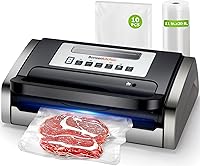
The MEGAWISE Updated Vacuum Sealer Machine 2025 fits a first-time buyer who wants dry and moist modes without a big footprint. Its 80kpa pump pulls a tight seal in 10 to 20 seconds.
It measures 15.2 x 4.1 x 2.3 in and weighs about 2.6 lb (1.2 kg), so it stores easily. The 12 in sealing wire seals 3 to 5 bags at once, and a vacuum hose lets you seal jars and wine bottles.
MEGAWISE runs a 24/7 live chat support team. That's a useful backup for a first machine, though it doesn't replace reading the setup steps.
Which countertop sealer suits a busy kitchen?
The FoodSaver V4400 2-in-1 suits a busy kitchen that wants automatic bag detection and moisture sensing. It seals full rolls and zipper bags with less manual work.
It includes an 11 in x 10 ft roll, quart and gallon bags and zipper bags. FoodSaver says meat sealed in the freezer can last up to 3 years, and the removable drip tray is dishwasher safe.
It's heavier at 10 lb and takes more counter space. FoodSaver backs it with a 1 year limited warranty.
Our FoodSaver V4400 review covers how the automatic features work in daily use. If you're weighing the brand overall, read is FoodSaver a good vacuum sealer before you decide.
How does brand and warranty affect the price?
A longer warranty and stronger support usually mean a higher price, and that's often worth it. The machine you keep for years costs less per year than a cheap one you replace.
Brand support matters when a seal fails or a gasket wears out. A maker with live chat or a phone line saves you time on troubleshooting.
Warranty length tells you how long the maker stands behind the pump and seals. A longer limited warranty is a stronger signal than a short one.
Don't pay extra for a brand name alone. Check the features, the seal width and the bag compatibility first, then let the warranty tip the decision.
Which vacuum sealer should you buy at each price point?
Pick by type first, then by the features your food needs. A budget handheld covers light use, a mid-range countertop model covers most kitchens and a chamber sealer covers heavy liquid work.
At the entry level, a handheld sealer or a compact countertop unit keeps the cost down. At the mid-range, dry and moist modes, a cutter and roll storage earn their price.
If you want a closer look at budget countertop machines, our Bonsenkitchen vacuum sealer review compares one against the field. For the full shortlist, see what vacuum sealer should I buy.
The decision rule is simple. Seal a few bags a week and a compact countertop model like the MEGAWISE is enough.
Seal often with wet food and the FoodSaver V4400's automatic features pay off. Seal liquids in volume and a chamber sealer is the only type that fits.
Budget for bags from day one. The machine is a one-time cost, but how much a vacuum sealer costs over a year depends on the supplies you feed it.
Frequently asked questions
How much does a vacuum sealer cost for a home kitchen?
A countertop vacuum sealer for a home kitchen sits in the mid-range for small appliances. The price depends on modes, sealing width and included accessories.
Budget models cost less but often skip features like moisture detection or built-in roll storage.
Are chamber vacuum sealers more expensive?
Yes. Chamber sealers cost the most of the three main types because they pull a stronger vacuum and seal liquids without a special mode.
They are heavier and take up more counter space, so they suit heavy users more than occasional ones.
Do you have to buy special bags for a vacuum sealer?
Yes, most sealers need textured vacuum bags or rolls made for the machine. Plain storage bags won't seal airtight.
Rolls let you cut custom lengths and often cost less per bag than pre-made sizes.
Is a handheld vacuum sealer cheaper than a countertop one?
Yes, handheld sealers are the cheapest type. They seal zipper bags and small containers rather than full rolls.
They suit small batches and light use, while a countertop model handles bulk freezing and meal prep.
What makes one vacuum sealer cost more than another?
Suction power, sealing width, extra modes, a built-in cutter and roll storage all add to the price. Warranty length and brand support matter too.
A wider sealing wire lets you seal more bags at once, which saves time on bulk jobs.