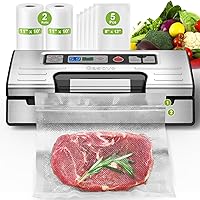
Do Vacuum Sealers Help Food Last Longer?
Yes, vacuum sealers help food last longer. Removing air slows oxidation and freezer burn, and a tight seal keeps moisture in, so meat, fish and leftovers hold quality far longer than a loose bag or wrap.
On this page (8 sections)
- Do vacuum sealers save food, and how does the seal work?
- Which foods benefit most from vacuum sealing?
- Does vacuum sealing help meat and fish last longer in the freezer?
- How much longer does food actually last?
- What does a vacuum sealer not do?
- Which vacuum sealer fits your kitchen and your food?
- How do you seal food so it actually keeps?
- So, do vacuum sealers save food and money?
Yes, vacuum sealers help food last longer. Removing air slows oxidation and freezer burn, and a tight seal holds moisture in, so meat, fish and leftovers keep their quality far longer than a loose bag or a sheet of wrap.
The gain is real but specific. A vacuum sealer buys you time in the freezer and a few extra days in the fridge.
The sections below cover where it works, where it doesn't, and which machines fit the job.
Do vacuum sealers save food, and how does the seal work?
Vacuum sealing removes most of the air around the food, then welds the bag shut. Less oxygen means slower oxidation, less freezer burn and a barrier against odors and moisture loss.
Freezer burn is the clearest case. It's dehydration, not spoilage, and it happens when cold air pulls moisture off the surface of meat or fish.
A sealed bag traps that moisture where it belongs, so texture and flavor survive months of storage.
In the fridge, the effect is smaller. Mold and bacteria still need cold, and a seal only slows the oxygen side of spoilage slightly.
Think of the sealer as one layer of protection on top of proper chilling, never a replacement for it.
FoodSaver says its system can keep meat fresh in the freezer for up to 3 years. That's a maker claim about its own bags, and it depends on a full seal and steady freezer temperature.
Two features decide whether that seal holds on real food. Bag detection finds the open end and positions it over the seal bar so you don't have to line it up by hand.
Moisture detection senses liquid near the seam and switches the machine to the right mode before the pump pulls it through. On the FoodSaver V4400 both run automatically once you slide the bag into the chamber.
Which foods benefit most from vacuum sealing?
Meat, fish and poultry gain the most, because they're expensive, prone to freezer burn and easy to portion. Cheese, coffee, nuts and dried goods also hold quality longer without air.
Fresh produce is the tricky case. Some vegetables release gas and soften in a sealed bag, so blanch them first if you plan to freeze.
Soft berries need a gentle vacuum so they don't crush.
Bread freezes well when sealed, and leftovers portioned into single servings make fast future meals. Liquids need a moist setting or a pre-freeze, since a running pump can pull soup toward the seal bar.
The butcher paper vs vacuum sealer comparison is worth reading if you freeze a lot of red meat. Paper breathes and suits short storage; a sealed bag wins for longer holds.
Does vacuum sealing help meat and fish last longer in the freezer?
Yes, and this is where the savings show up. A tight seal keeps ice crystals from forming on the surface, which is what turns a good steak gray and dry after a few weeks.
Portion first. Cut family packs into meal-sized pieces, pat them dry, and seal each one flat so they stack and thaw fast.
Label with the date and contents, since a clear bag hides what's inside.
For fish, a firm seal matters even more because fillets are thin and freeze quickly. Our guide to the best vacuum sealer for fish fillets covers the models that handle delicate, moist food without pulling it into the pump.
If you process whole cuts, sausage or ground meat at home, the best vacuum sealer for meat processing breaks down which features matter for volume and wet food.
Which machine suits meat and fish?
The Nesco Deluxe VS-12 is the pick for moist proteins and high volume. It has dry, moist and double seal modes plus a gentle vacuum option, which lets you seal marinated or soft food without crushing it or pulling liquid into the seal.
Its double heat seal creates a stronger seam than a single seal, which helps when bags hold liquid or sit in the freezer for months. The 130-watt double pump is built to pull air faster across bigger batches.
The unit accepts bags up to 11.8 inches wide, so a whole fillet or a large cut fits without trimming. Two rolls come in the box to start.
How much longer does food actually last?
Expect months in the freezer and days, not weeks, in the fridge. The exact number depends on the food, the seal and how cold your freezer runs.
Frozen meat, fish and poultry hold quality for many months when sealed, where wrapped cuts often dry out within a few weeks. Cheese and coffee last longer in the fridge or pantry with air removed.
Fresh produce and leftovers gain the least. A sealed container of soup still spoils on its normal schedule, just a little slower.
The sealer protects quality; your fridge protects safety.
FoodSaver puts freezer freshness at up to 5 times longer than traditional storage for the PowerVac Compact. That's a broad maker figure across food types, so treat it as a direction rather than a promise for every cut.
A lean steak and a bag of berries won't age at the same rate under any seal.
What does a vacuum sealer not do?
It doesn't kill bacteria, and it doesn't make warm food safe. Anaerobic bacteria can grow without oxygen, so sealed food still needs proper chilling and a date label.
It also won't rescue a bad seal. A wrinkle, a crumb or moisture across the seam lets air back in, and the food behaves like it was never sealed.
Check every bag after sealing and reseal if the seam looks weak.
Soft foods need care. Berries, bread and fresh pasta can crush under full vacuum, so use a gentle setting or a rigid container.
And never seal raw and cooked food in the same bag without cleaning between jobs.
Thin or mismatched film can fail at the seam even on a good machine, so stick to bags and rolls the maker lists as compatible. The V4400 works with FoodSaver 8 inch and 11 inch rolls, all pre-made bag sizes, FreshSaver zipper bags, Fresh containers and the Quick Marinator.
The Nesco VS-12 takes any brand of vacuum sealer bags.
Which vacuum sealer fits your kitchen and your food?
Match the machine to what you seal most. A full-size countertop unit for weekly meal prep, a compact model for tight kitchens, or a handheld for jars and containers.
The FoodSaver V4400 is the pick for hands-off everyday sealing. Automatic bag detection means you slide the bag in and the machine sets the vacuum and seal, and automatic moisture detection switches modes when liquid is present.
LED light indicators walk you through each step.
Its removable drip tray catches overflow and is dishwasher safe, which matters if you seal marinades or raw meat often. A 5-year limited warranty backs the build, and the starter kit includes an 11 inch by 10 foot roll, quart and gallon bags, and zipper bags.
It also doubles as a handheld sealer for zipper bags, containers and canisters. It measures 11 by 20 by 12 inches and weighs 10 pounds, so plan counter or cabinet space for it.
The FoodSaver PowerVac Compact VS0150 suits small kitchens and lighter jobs. It stores vertically to save counter space and has dry and moist settings for different food types.
At roughly 18 inches long and 5.6 inches wide, it tucks against a wall or into a narrow gap between appliances.
FoodSaver says it seals with 35% less bag waste than earlier models, and an alignment tray helps you place the bag correctly. It connects to a handheld sealer for containers and zipper bags.
The box includes an 11 inch by 8 foot roll plus quart and gallon bags.
If you mostly seal jars, containers or bags you already own, a handheld vacuum sealer for food covers that job without a countertop machine.
How do you seal food so it actually keeps?
Dry the food, leave headspace, and keep the seal flat and clean. Most seal failures come from moisture or crumbs across the seam, not from the machine.
Pat meat and fish dry before sealing, and freeze liquids first or use a moist mode. Leave an inch or two of bag above the food so the seal bar has clean film to grip.
If the machine has a drip tray, empty and rinse it after wet jobs so overflow doesn't sit in the channel.
Press the bag flat and push air out before the machine runs. After sealing, check for wrinkles and a clear seam line, then label with the date above the seal, not over it.
Store sealed bags flat in the freezer so they stack and thaw quickly. For storage times and safety, the USDA's freezing and food safety guidance is a solid reference.
So, do vacuum sealers save food and money?
Yes, a vacuum sealer saves food in the ways that matter most: less freezer burn, longer holds on meat and fish, and fewer spoiled leftovers. It won't stretch fresh produce for weeks in the fridge, and it never replaces cold storage.
For most households, the pick is the FoodSaver V4400 for its automatic bag and moisture detection. Choose the Nesco VS-12 if you seal wet meat and fish in volume, and the compact PowerVac VS0150 if counter space is tight.
Buy one if you shop in bulk, freeze portions or process your own meat and fish. Skip it if you mostly eat fresh food within a few days; the bags and time won't pay you back.
When you're ready to shop, start with the model that matches what you freeze most.
Frequently asked questions
Does vacuum sealing make food last longer in the fridge?
Yes, a little. Removing air slows mold and oxidation on cheese, produce and leftovers, though refrigeration temperature matters more than the seal.
Expect extra days, not extra weeks, for most fresh foods.
Can you vacuum seal liquids or soups?
Yes, with the right mode. Use a moist setting and leave headspace so liquid doesn't reach the seal bar, or freeze the soup first and seal the solid block.
A drip tray helps catch overflow on machines that have one.
Is vacuum sealing worth it for small households?
It can be. Portioning bulk meat, freezing leftovers and resealing cheese or coffee are all jobs one person can use.
A compact model that stores upright suits small kitchens where counter space is tight.
Does vacuum sealing replace the freezer or fridge?
No. A vacuum seal slows spoilage but does not stop it, and it cannot make warm food safe.
Keep everything chilled or frozen as usual and treat the seal as one more layer of protection.